AI News Roundup: The Agent Era Goes GA
OpenAI shipped GPT-5.5 and Workspace Agents in the same week, Anthropic released Claude Design and Opus 4.7, Meta trained AI on 8,000 employees' keystrokes, and SpaceX took a $60B option on Cursor. Agents are no longer a demo.

Larry Maguire
24 April 2026
Friday AI Roundup: The Agent Era Goes GA
Five to seven stories from the past week in AI, analysed through one question: how is this changing the nature of work? Published every Friday morning.
Issue
02
Published
24 April 2026
Stories
6 with analysis
Read time
8 minutes
This Week at a Glance
- →OpenAI released GPT-5.5 and Workspace Agents in the same week, putting team-scale agents inside Slack and Salesforce.
- →Claude Opus 4.7 reached 64.3% on SWE-bench Pro, moving coding agents into territory where they can meaningfully accelerate real engineering work.
- →Meta began training AI agents on the keystrokes of 8,000 US employees, with no opt-out on work devices.
- →SpaceX took a $10B stake in Cursor with a $60B acquisition option, signalling the IDE as critical infrastructure.
Four separate releases this week share a single pattern. OpenAI shipped Workspace Agents into Slack, Anthropic shipped Claude Design as a finished product, Meta started training agents on actual employee work traces, and SpaceX took a stake in Cursor at infrastructure-scale valuations. Each of these treats the agent as a delivered product layer, not a research demo. The week also produced an HBR cohesion study that matters for anyone rolling out Copilot or ChatGPT at team scale. Six stories follow, each analysed through one question: how does this change work.
OpenAI ships frontier model and team-agent platform in one week
OpenAI released GPT-5.5 on 23 April 2026 alongside Workspace Agents, a new system for deploying AI automation across Slack, Google Drive, Microsoft apps, Salesforce and Notion. GPT-5.5 is available to ChatGPT Plus, Pro, Business and Enterprise users. Workspace Agents enter research preview in Business, Edu and Enterprise plans, free until 6 May and credit-based after that.
GPT-5.5 reportedly achieves 88.7% on SWE-bench for coding and 92.4% on MMLU, with a 60% reduction in hallucinations versus GPT-5.4. Workspace Agents are powered by Codex and run in the cloud continuously, drafting emails, pulling data across tools and handling multi-step work initiated from Slack, Google Drive or native ChatGPT. The agents read channel context, execute instructions across applications and return completed work to the channel or user.
For workplace teams the shift appears significant. Agents can now live as persistent cloud services integrated into team workflows rather than requiring chat-based interaction. A team can build one agent, deploy it to Slack, and the agent runs autonomously to fetch data, compose responses and trigger actions across linked applications. Slack integration suggests OpenAI expects agents to become ambient workplace infrastructure, available in the same channels where teams already coordinate work.
Claude Opus 4.7 reaches 64% on public SWE-bench, trails unreleased Mythos
Anthropic released Claude Opus 4.7 on 16 April 2026 with improved software engineering performance. The model scores 64.3% on SWE-bench Pro, up 11 percentage points from Opus 4.6's 53.4%. It is available via Claude.ai, the Anthropic API, Amazon Bedrock, Google Cloud Vertex AI and Microsoft Foundry at unchanged pricing. Anthropic's internal Mythos model reportedly achieves 77.8% on the same benchmark, though it remains lab-only.
The rise from 53.4% to 64.3% represents a qualitative shift in what coding agents can accomplish. At the 4.6 level, agents could handle isolated function writing and simple refactoring. Opus 4.7 now tackles multi-step problems where the agent must navigate unfamiliar codebases, identify dependencies, modify interdependent components and verify that changes do not break downstream functionality. The mid-60s percentage range signals agents moving beyond toy problems into territory where they can meaningfully accelerate real engineering work.
Engineering teams will find this changes task delegation thresholds. Code review no longer assumes all agent-written code requires human verification, and the quality floor is higher. Routine refactoring, scaffold generation and bug fixes within well-understood systems become candidates for autonomous execution with spot-check review. Teams that experimented with Opus 4.6 and found agents unreliable for production may want to pilot 4.7 on specific classes of work. The remaining 36 percentage points to Mythos suggest agents will not be fully autonomous for years, but the trajectory is steepening.
Anthropic Claude Design brings generative visuals to Anthropic Labs
Anthropic released Claude Design on 17 April as a research preview within Anthropic Labs. Built on Opus 4.7, the product accepts text prompts, images, screenshots and documents as input, then generates interactive prototypes, slide decks, marketing collateral and design mockups. Exports are available to Canva, PDF, PowerPoint, standalone HTML and shareable URLs.
Claude Design may appear similar to existing AI features in Canva or Figma but it operates at a different layer. Rather than offering style suggestions or image generation, Claude Design lets organisations onboard a design system upfront, including brand colours, typography, component libraries and spatial rules, then enforces consistency across every export automatically. Designs travel from prompt to finished artefact without designer review, and teams can move from concept to interactive prototype in hours rather than weeks. The handoff to Claude Code integration bundles designs directly for development implementation.
The workplace implication is substantial. In-house design operations see efficiency gains through faster iteration but also face reduced headcount as teams generate brand-consistent collateral without hiring designers. Small business owners may produce professional marketing materials without agency fees. Agencies whose primary work is slide decks, templates and iteration-heavy collateral face direct displacement. Design leadership roles may shift from execution toward strategy and brand governance. Those who supervise systems and consistency may remain valuable; those who execute repetitive design work face pressure to diversify their scope.
Meta trains AI on employees' keystroke logs, no opt-out for US staff
Meta's Model Capability Initiative captures keystrokes, mouse movements and periodic screenshots from the computers of 8,000 US employees, with no option to decline participation on work-provided devices. The surveillance-for-training loop is now open, with employees generating the training data for AI agents designed to automate their own jobs. Meta CTO Andrew Bosworth confirmed the lack of opt-out and that the practice applies to all US workers. European employees remain exempt due to GDPR.
The collected keystroke data is far more valuable for training knowledge-work agents than synthetic data. Real keystroke sequences, mouse patterns and task orderings teach models how humans genuinely approach complex work. An agent trained on real work traces learns timing, error correction, navigation patterns and the cognitive flow of knowledge work. The strategic intent is explicit, with Meta envisaging agents eventually handling "the majority of work" while employees shift to directing and reviewing agent output.
For employers evaluating similar programmes, this sets a direct precedent. If keystroke surveillance is normal practice at a tier-one tech employer, industry expectations will shift. Knowledge workers face a dynamic Meta's choice crystallises: participation in training your own replacement is not optional. Leaders considering comparable initiatives will cite Meta's scale and the lack of employee pushback as cover. The consequence is a structural change in what working at a large employer means. Your work patterns and task execution become intellectual property for your organisation's own automation agenda, without compensation or control over how that data is deployed.
HBR research: reliance on AI for personal support weakens team cohesion
Research from Boston University's Constance Noonan Hadley and the University of Canterbury's Sarah L. Wright reveals a cohesion risk emerging inside organisations deploying AI at scale. As employees increasingly turn to AI assistants for support with work challenges and social questions, peer-to-peer connection weakens. The pattern appears consistent across roles and industries surveyed, suggesting a structural consequence of widespread AI adoption rather than a niche concern.
When an employee faces a task setback or needs guidance, historically they walked to a colleague's desk or sent a message. That interaction built context, created familiarity and reinforced team identity. AI flattens that friction. The answer comes faster, with no social obligation and no reciprocal goodwill that accumulates over time. Repeated across dozens of daily micro-interactions, the cumulative effect erodes the informal knowledge-sharing networks that bind teams together. Employees reportedly feel less connected to colleagues even when meeting in person.
Managers and HR leaders rolling out Copilot or ChatGPT now face a choice. Technical enablement alone creates this risk. Leaders should establish explicit norms around when peer support is preferred over AI, create structured peer-mentoring time, and measure team cohesion metrics alongside adoption rates. The goal is not to restrict AI use but to prevent it from displacing the human interactions that organisations actually run on.
SpaceX's $60B Cursor bet signals the IDE as infrastructure
As reported by TechCrunch on 23 April 2026, SpaceX committed $10 billion guaranteed to Cursor with an option to acquire the coding IDE outright for $60 billion. The move pairs SpaceX's surplus compute capacity with Cursor's Composer coding models, which require substantial GPU resources to train and run at scale. What is at stake is not a developer tool but infrastructure in the same class as compute platforms and cloud services.
Cursor's Composer needs frontier-grade compute to train and run agentic coding models competitively. SpaceX, with vast hardware investments and satellite compute networks, can supply that at costs other investors cannot match. In exchange, SpaceX gains a strategic stake in the IDE layer, positioning itself upstream of every engineering team that uses Cursor. The $60 billion option converts a supplier relationship into potential full ownership of the interface between engineers and AI coding agents.
For engineering leaders evaluating coding agents, the implication cuts deeper than the valuation headline. When your IDE sits inside a frontier-compute supplier, you face consolidation risk and vendor-dependency concerns that traditional software licensing never posed. Cursor's independence becomes material to your team's long-term autonomy. Engineering leaders should watch whether SpaceX exercises the option, whether Cursor maintains feature parity across compute backends, and whether other IDE vendors can compete on cost when one player controls both the models and the substrate.
Casey Newton at Platformer on the tech-industry revival of universal basic income as a response to AI-driven job displacement. Newton remains sceptical of the proposal as a serious solution.
Research: What China's AI Agents Reveal About the Future of Commerce
Harvard Business Review research on how autonomous AI agents are reshaping e-commerce competition in China. Companies must now optimise for algorithmic decision-makers rather than human buyers alone.
Please don't trust your chatbot for medical advice
Gary Marcus walks through four recent studies showing persistent chatbot failure modes in medical reasoning. A useful counterweight to the "agents as product" enthusiasm driving this week's headlines.
Human drivers keep crashing into Waymos
Timothy B. Lee at Understanding AI on the incident data from Waymo's autonomous fleet and what platooning and positioning patterns reveal about where real-world agent reliability actually sits.
One Pattern This Week
Every major release this week treats agents as a delivered product with a team-scale interface, not a research showcase. Workspace Agents, Claude Design, Opus 4.7 coding and the SpaceX-Cursor deal all point the same way. The question for operators is no longer whether agents can do the work, but which workflows they sit inside first.
About the Friday AI Roundup
Published every Friday morning from sources including Anthropic, OpenAI, DeepMind, Microsoft AI, Meta AI, Reuters, Platformer, MIT Tech Review, Bloomberg, Stanford HAI, EFF, McKinsey Digital, HBR, and the EU AI Act tracker. No hype. No clickbait. Primary sources only.
Your AI Trainer
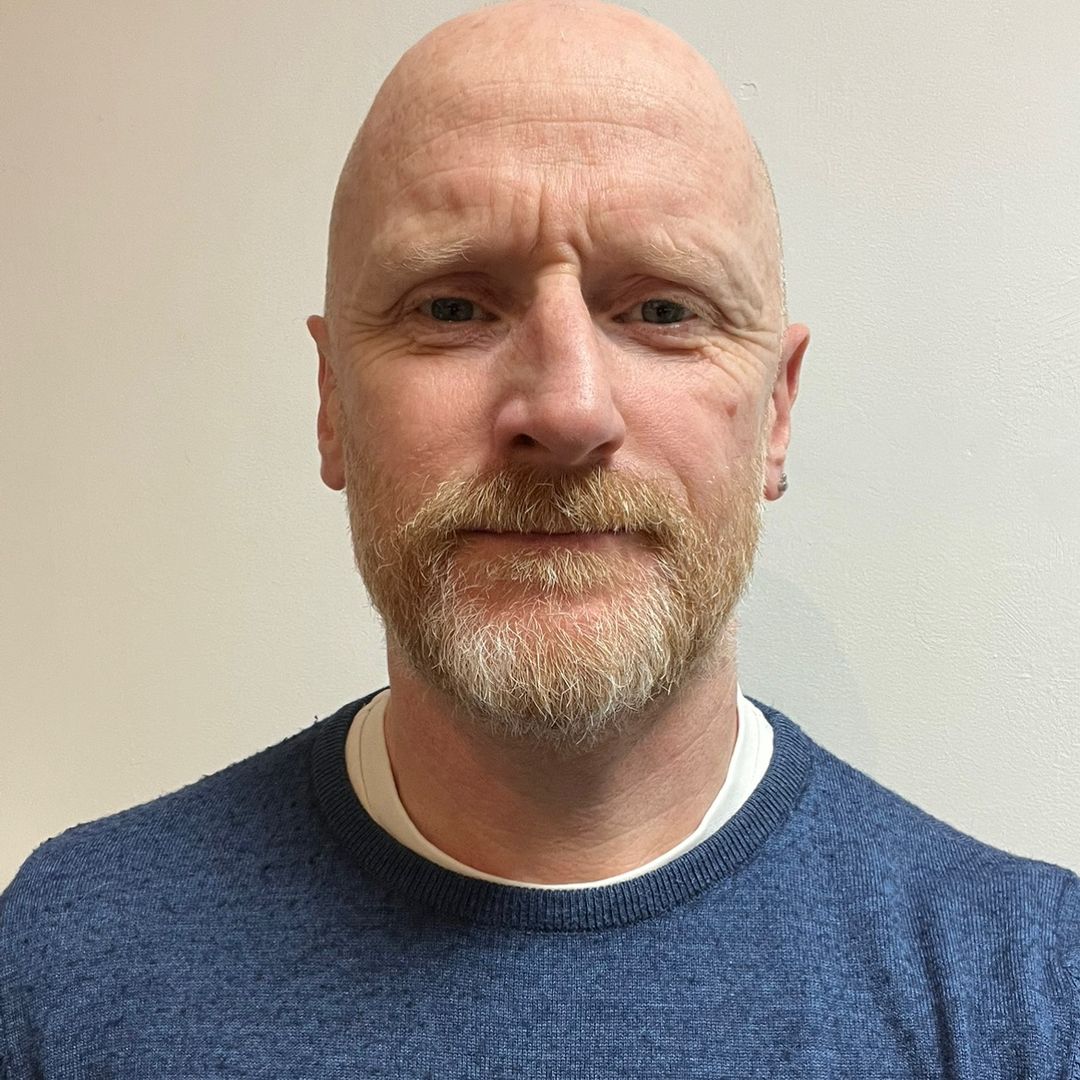
Larry G. Maguire
Work & Business Psychologist | AI Trainer
MSc. Org Psych., BA Psych., M.Ps.S.I., M.A.C., R.Q.T.U
Larry G. Maguire is a Work & Business Psychologist and AI trainer who helps professionals and organisations develop the skills they need to integrate AI in the workplace effectively. Drawing on over two decades in electronic systems integration, business ownership and studies in human performance and organisational behaviour, he operates in the space where technology meets people. He is a lecturer in organisational psychology, career & business coach with offices in Dublin 2.
GenAI Skills Academy
Achieve Productivity Gains With AI Today
Send me your details and let’s book a 15 min no-obligation call to discuss your needs and concerns around AI.