AI News Roundup: The Deployment Race Begins
Anthropic ships Claude Design and Opus 4.7, DeepMind releases Gemini Robotics-ER 1.6, and Stanford's AI Index puts organisational adoption at 88 percent. The frontier race has slowed and the integration race has started.

Larry Maguire
17 April 2026
AI News Roundup, The Deployment Race Begins
Five to seven stories from the past week or two in AI, analysed through one question. How is this changing the nature of work? Published every Friday morning.
Issue
01
Published
17 April 2026
Stories
6 with analysis
Read time
8 minutes
This Week at a Glance
- →Anthropic released Claude Design and Claude Opus 4.7 on the same day, pushing the flagship model into visual work.
- →Google DeepMind shipped Gemini Robotics-ER 1.6 with 93 percent gauge-reading accuracy and stronger spatial reasoning.
- →OpenAI introduced GPT-Rosalind for biochemistry and genomics, restricted to verified research organisations only.
- →Stanford's 2026 AI Index puts integrated adoption at 41 percent and overall use at 88 percent, while AI incidents climbed to 362.
- →A new Gallup survey of 23,717 US employees finds 27 percent in AI-adopting firms reporting disruptive workplace changes.
- →Three longer reads on the state of the frontier, the public-versus-expert opinion gap, and the narrowing US-China AI gap.
The frontier labs all shipped over the past fortnight, and none of them shipped anything that changes the map. Claude Design, Opus 4.7, Gemini Robotics-ER 1.6 and GPT-Rosalind are each useful but none are decisive. The more interesting signal came from Stanford's 2026 AI Index and a fresh Gallup workforce survey, which together describe a workforce that has already adopted AI faster than the organisations employing them. The frontier race has slowed, although the deployment race has started, and most enterprises are losing it quietly.
Anthropic ships Claude Design and Claude Opus 4.7 together
Anthropic released Claude Design on 17 April, a visual collaboration tool powered by Claude Opus 4.7 that generates design assets, prototypes, slides and marketing collateral from natural language prompts. The tool supports brand system application across outputs, and it integrates with Claude Code so technical teams can move from concept to UI without opening a design tool. It is available in research preview for Pro, Max, Team and Enterprise subscribers.
Opus 4.7 launched the same day with improved coding, stronger long-running task performance and higher-resolution vision. Pricing held steady at five dollars per million input tokens and twenty-five dollars per million output. The model is available across Claude products, Amazon Bedrock, Google Cloud Vertex AI and Microsoft Foundry from day one, which suggests Anthropic is now treating multi-cloud availability as the baseline expectation rather than a late-stage rollout.
The workplace consequence is not the model. It is Claude Design. Visual output has been the last substantive gap between what technical teams can produce themselves and what they still had to commission from designers or marketing colleagues. That gap is now narrower for anyone with a Claude subscription, although specialist design roles are unlikely to disappear. The volume of low-stakes visual work routed through them almost certainly will fall.
Source
Gemini Robotics-ER 1.6 pushes robots towards general physical work
Google DeepMind released Gemini Robotics-ER 1.6 on 14 April, extending its embodied reasoning model with multi-view perception, stronger spatial reasoning and instrument-reading capability at 93 percent accuracy on gauges and digital readouts. DeepMind reports a six percent improvement on text and ten percent on video against the previous version in safety compliance scenarios. The model is available through the Gemini API and Google AI Studio.
The headline number is the 93 percent reading accuracy, which matters because instrument reading is the long-standing bottleneck for robots in manufacturing, utilities and logistics. Gauges vary by manufacturer, by age and by lighting. A robot that can read them reliably without re-mapping the environment each time starts to be deployable across mixed industrial sites rather than one production line.
Physical work is the category that has absorbed least AI disruption so far, and that is beginning to shift. The practical implication for operations and facilities leaders is that robot deployment planning no longer requires the environment to hold still. The implication for workers in manufacturing, logistics and field services is that the displacement conversation has moved from call centres and knowledge work into physical trades.
GPT-Rosalind narrows the gap between lab and model on life sciences
OpenAI introduced GPT-Rosalind on 16 April, a reasoning model fine-tuned for biochemistry, genomics and protein engineering. It ranks above the 95th percentile of human experts on prediction tasks and reaches the 84th percentile on RNA sequence generation. Access is restricted to verified research organisations through a trusted access programme, and there is no public release.
The restricted access is the interesting part. OpenAI has previously defaulted to broad availability for general-purpose models and held back only on safety-sensitive capabilities. Rosalind suggests a pattern where domain-specialist models go to credentialed organisations first, although broad consumer release is no longer the assumed endpoint. For smaller biotech and pharma firms the programme is a plausible route to competing with the R and D budgets of the majors on hypothesis generation and experiment planning.
Specialist scientific labour does not disappear here, although the bottleneck shifts. Where it once sat in expert synthesis and protein modelling, it now sits in deciding which model outputs are worth running an experiment against. That is closer to research strategy than to research execution, and it changes what a productive day looks like for a computational biologist.
Stanford finds safety benchmarks lagging as AI incidents climb
Stanford HAI published its 2026 AI Index Report on 13 April. The report shows that responsible AI governance has not kept pace with rapid capability advances. Reported AI incidents rose to 362 in 2024, up from 233 the previous year. Major labs including Anthropic, Google and OpenAI have stopped disclosing critical training data and duration metrics, which raises transparency concerns for any organisation relying on vendor self-reporting. Models now match human performance on PhD-level science tasks, although safety and fairness benchmarks have lagged significantly.
For organisations adopting AI at scale, the practical issue is that compliance audits become harder to run when vendors disclose less. Internal governance frameworks that assume access to model cards, training data summaries or independent safety evaluations are increasingly working with thinner ground truth. That changes how procurement teams have to evaluate AI suppliers, and it changes how compliance teams document the basis for their risk assessments.
The deeper signal is that the gap between what models can do and what is publicly verifiable about how they were built is widening. Workplace AI policy written today should assume that gap continues to grow. Building in independent evaluation, internal red-teaming and clear documentation of intended use cases is the realistic alternative to waiting for regulators to close it.
Stanford's adoption data shows entry-level hiring contracting
The 2026 AI Index also reports that 41 percent of organisations have integrated AI to improve practices, with 88 percent reporting some level of AI use, up three points on the previous quarter. Productivity gains are most measurable in software development, at around 26 percent, and customer support, at 14 to 15 percent. AI agent deployment remains in single digits across most business functions. Entry-level developer employment in the United States, ages 22 to 25, fell roughly 20 percent in 2024.
The adoption figure and the entry-level contraction are the same story. Productivity gains concentrate in repetitive structured work, which is also the work that junior hires used to do while learning the domain. Organisations are getting the output without training the next generation to produce it unaided. This is a pipeline problem hiding inside a productivity headline.
The practical implication for leaders is uncomfortable. The teams showing the strongest AI-assisted productivity gains are also the teams where the traditional learning ladder has been removed. A cohort of mid-career developers five years from now depends on choices being made in hiring plans right now, and most hiring plans are optimised for this quarter. There is no obvious market mechanism that resolves this, and it falls to organisational choice instead.
Gallup finds AI adoption now driving visible workforce restructuring
Gallup released a survey of 23,717 US employees on 13 April. The data shows 41 percent of workers now work for organisations with integrated AI tools, and roughly half of all employees use AI at least a few times yearly. The more striking finding is that 27 percent of workers in AI-adopting organisations report disruptive workplace changes, against only 17 percent in non-adopting organisations. Large firms with 10,000 or more employees that have adopted AI show 33 percent reduction activity against 30 percent expansion activity. Job displacement fears reach 23 percent among workers in AI-adopting organisations, up from 18 percent overall.
Two things are worth pulling out. The first is that staffing volatility tracks AI adoption directly, which means leaders cannot tell their workforce that AI is purely additive when the numbers say otherwise. The second is that the displacement fear figures are not theoretical anxieties, because they correspond to observed restructuring inside the same firms. Trust gets eroded when communications and reality diverge, even where the actual displacement turns out to be smaller than the fear.
For HR and operations leaders, the actionable implication is that AI rollouts now come with a workforce communications cost that is no longer optional. People can see the changes, so the organisation has to be specific about who is affected, what training is available and what the realistic timeline looks like. Vague reassurance accelerates the trust erosion rather than mitigating it.
MIT Technology Review, Want to understand the current state of AI? Check out these charts
A chart-led snapshot of where the frontier actually sits as of March 2026, useful if you are briefing a board and want to stop relying on vendor marketing decks.
MIT Technology Review, Why opinion on AI is so divided
A measured look at why expert and public views diverge by roughly 50 points on AI's likely impact on work, and what that gap means for any internal town hall.
Fortune, China has narrowed AI gap with the US
Reports Stanford findings on the narrowing US-China model gap (39 Arena points), researcher migration patterns and infrastructure shifts that affect long-term workforce planning.
One Pattern This Week
The interesting story is no longer which lab is ahead on benchmarks, because the gap between how fast employees have adopted AI and how slowly their organisations have adapted to that adoption keeps widening. Governance, training pipelines and executive communication are all trailing the work people are already doing with these tools. The deployment race is not about capability, it is about integration, and it has already started.
About the AI News Roundup
Published every Friday morning from sources including Anthropic, OpenAI, DeepMind, Microsoft AI, Meta AI, Reuters, Platformer, MIT Tech Review, Bloomberg, Stanford HAI, EFF, McKinsey Digital, HBR and the EU AI Act tracker. No hype. No clickbait. Primary sources only.
Your AI Trainer
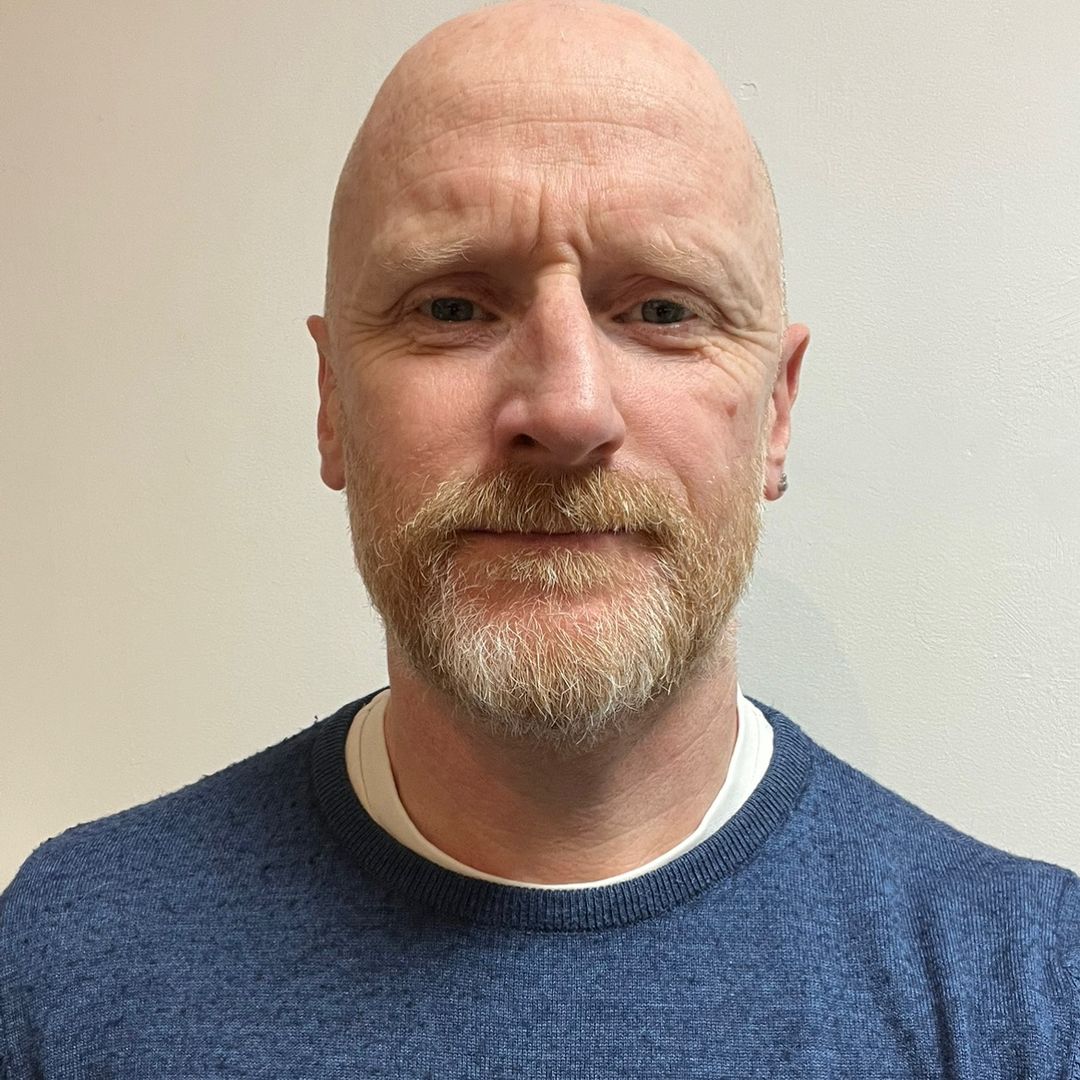
Larry G. Maguire
Work & Business Psychologist | AI Trainer
MSc. Org Psych., BA Psych., M.Ps.S.I., M.A.C., R.Q.T.U
Larry G. Maguire is a Work & Business Psychologist and AI trainer who helps professionals and organisations develop the skills they need to integrate AI in the workplace effectively. Drawing on over two decades in electronic systems integration, business ownership and studies in human performance and organisational behaviour, he operates in the space where technology meets people. He is a lecturer in organisational psychology, career & business coach with offices in Dublin 2.
GenAI Skills Academy
Achieve Productivity Gains With AI Today
Send me your details and let’s book a 15 min no-obligation call to discuss your needs and concerns around AI.